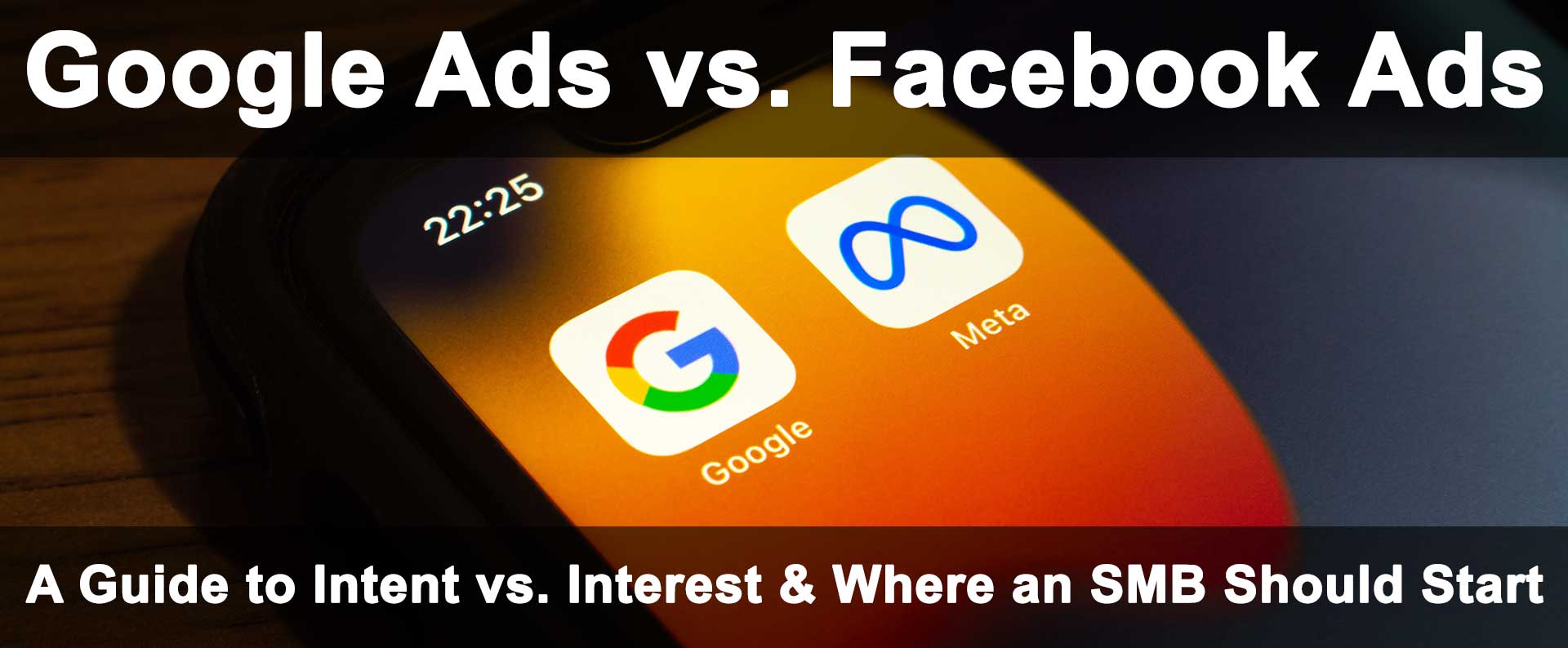
The digital advertising landscape often feels like a high-stakes crossroads. With a limited budget, every dollar must perform. The debate usually centers on two titans: Google Ads and Facebook Ads. While both offer massive reach, they function on fundamentally different psychological principles.
Understanding these differences is the key to transitioning from "spending money on ads" to "investing in growth." This guide breaks down the mechanics of both platforms to help you determine which serves as the best starting point for your unique business goals.
The Core Difference: "Intent" vs. "Interest"
The entire choice between Google and Facebook boils down to one fundamental concept: user intent.
Google Ads: Capturing Intent (The "Active Searcher")
Think of Google as a digital yellow pages on steroids. People use Google with a purpose. They are actively searching for a solution to a problem, an answer to a question, or a specific product or service.
- Analogy:
Google Ads is like setting up a booth at a home improvement show. Everyone walking by has a home and is actively thinking about renovation, repair, or decor. They are already in a "buying mindset." Your ad appears when they search for "kitchen remodeler near me" or "fix leaky faucet." You are capturing existing demand.
- Industry Jargon Explained:
This is often called Search Engine Marketing (SEM) or Pay-Per-Click (PPC) advertising. You primarily pay when someone clicks on your ad.
Facebook (and Instagram) Ads: Generating Interest (The "Attention Grabber")
Think of Facebook and Instagram as a massive, endless digital party. People are there to socialize, be entertained, catch up with friends, and discover new things. They are not actively looking to buy a service; they are scrolling to pass the time.
- Analogy:
Facebook Ads is like a charismatic brand ambassador walking through a busy town square, handing out samples of a new product. They interrupt the crowd's flow, generate curiosity, and build awareness for something people didn't know they wanted. You are generating new demand.
- Industry Jargon Explained:
This is called Social Media Marketing and is largely driven by sophisticated targeting based on demographics, interests, behaviors, and connections.
Key Takeaway:
If you're looking to capture demand from customers who are actively searching for your services, Google Ads is your best bet. If you're aiming to generate interest and create demand for your brand, Facebook Ads is more suitable.
Understanding this "Intent vs. Interest" paradigm is the first step to spending your budget wisely.
Key Terminology:
- Search Engine Marketing (SEM):
Using paid advertisements that appear on search engine results pages (like Google).
- Paid Social:
Placing advertisements on social media platforms to target specific demographics.
- CTR (Click-Through Rate):
The percentage of people who see your ad and actually click on it.
When to Lean on Google Ads: Capturing Ready-to-Buy Customers
Google Ads excels when potential customers are in the research and decision phase. Your goal is to be the answer to their immediate query.
Ideal Goals for Google Ads:
- Generating leads and phone calls today.
- Driving sales for specific products or services.
- Getting directions to your physical location.
- Promoting special offers to an audience ready to act.
Key Google Ad Formats & Jargon Explained:
- Search Ads:
Text-based ads that appear above or below organic search results. You pay when someone clicks (Cost-Per-Click or CPC).
- Performance Max:
A goal-based campaign type that uses automation to show ads across all Google properties (Search, YouTube, Gmail, Display) to drive conversions.
- Keywords:
The words or phrases you "bid" on. When a user's search query matches your keyword, your ad may trigger.
Best For Businesses Whose Customers Exhibit Clear Search Intent:
- "Near Me" & Urgent Services:
Plumbing ("burst pipe repair"), HVAC ("AC repair emergency"), Locksmiths.
- Professional Services with Specific Needs:
Lawyers ("divorce lawyer consultation"), Accountants ("small business tax filing service").
- E-commerce & Retail for Specific Products:
A shoe store bidding on "women's waterproof hiking boots".
- Healthcare for Specific Procedures:
A dental clinic for "Invisalign consultation" or a clinic for "knee pain treatment."
How it Works & Actionable Steps:
- Keyword Research:
Identify the terms your ideal customers use when searching for your solutions. Tools like Google Keyword Planner can help.
- Campaign Setup:
Create campaigns targeting these keywords. You'll choose between Search Network (text ads on Google search results), Display Network (visual ads on websites), Video (YouTube ads), and Shopping campaigns (for e-commerce).
- Ad Copywriting:
Write compelling ad copy that directly addresses the user's search query and highlights your unique selling propositions.
- Landing Page Optimization:
Ensure the page users land on after clicking your ad is relevant, user-friendly, and clearly guides them toward conversion (e.g., filling out a form, making a call, purchasing).
- Budgeting:
Start with a modest daily budget and monitor performance closely. Google Ads allows for precise control over spending.
- Tracking Conversions:
Set up conversion tracking to measure which keywords and ads are driving valuable actions.
Actionable Industry Examples:
- Construction:
A roofing contractor runs Search Ads on keywords like "storm damage roof repair [City Name]" or "residential roofing contractor." They can use Google Local Service Ads (the "Google Guaranteed" badge) to appear at the very top of search with high trust signals.
- Healthcare:
A physical therapy clinic targets keywords like "sciatica pain relief" or "post-surgery rehabilitation." They can create a "Thank You" page after a booking is made and use the Google Ads conversion tracking pixel to measure which keywords led to appointments.
- Professional Services (Legal/Accounting):
A business law firm focuses on long-tail, high-intent keywords like "employee contract review service" or "startup business incorporation lawyer." The ad copy should highlight a free initial consultation to lower the barrier for a click.
When to Leverage Facebook/Instagram Ads: Building Awareness and Desire
Facebook and Instagram ads are visual storytellers. They are ideal for the awareness and consideration stages of the customer journey.
Ideal Goals for Facebook/Instagram Ads:
- Building brand recognition and loyalty.
- Promoting visually appealing products, menus, or portfolios.
- Driving traffic to your blog or educational content.
- Remarketing to people who have already visited your website.
Key Facebook Ad Formats & Jargon Explained:
- Audience Targeting:
Defining who sees your ad based on Demographics (age, location, job title), Interests (pages they like, topics they follow), and Behaviors (purchase history, device usage).
- Lookalike Audiences:
A powerful tool where Facebook finds new people who are similar to your existing customers (using a source like your customer email list).
- Engagement Campaigns:
Campaigns optimized for likes, comments, shares, or video views to build community and content reach.
Best For Businesses That Need to Showcase, Educate, or Build a Brand:
- Visual & Lifestyle Brands:
Restaurants, fashion retailers, fitness studios, interior designers.
- Businesses with Long Consideration Cycles:
High-end B2B services, consulting, elective healthcare.
- Local Businesses Building Community:
Cafes, boutiques, salons promoting events or new arrivals.
How it Works & Actionable Steps:
- Define Your Audience:
Utilize Facebook's robust targeting options based on demographics (age, location, gender), interests (hobbies, pages liked), behaviors (purchase history, device usage), and custom audiences (website visitors, email lists).
- Creative Development:
Focus on compelling visuals (images, videos) and concise, engaging ad copy. The goal is to stop the scroll and capture attention.
- Campaign Objectives:
Select objectives aligned with your goals, such as Brand Awareness, Reach, Traffic, Engagement, Lead Generation, or Conversions.
- Ad Placement:
Choose where your ads appear – Facebook Feed, Instagram Feed, Stories, Reels, Messenger, Audience Network.
- Budgeting:
Set a budget (daily or lifetime) and bidding strategy. Facebook offers flexibility in spending.
- A/B Testing:
Test different creatives, audiences, and ad copy to optimize performance.
- Pixel Implementation:
Install the Facebook Pixel on your website to track user behavior, measure conversions, and build custom audiences for retargeting.
Actionable Industry Examples:
- Restaurants:
A new pizza place uses Instagram Story ads with a mouth-watering video of their signature pie being made. They target users within a 5-mile radius who have shown interests in "food," "local restaurants," and competitor pages. The call-to-action (CTA) is "Order Now" linked to their online ordering system.
- Retail:
A boutique clothing store runs a Carousel Ad on Facebook showcasing 5 images of a new summer collection. They target a Lookalike Audience based on past purchasers. The ad drives traffic to the specific product category page on their website.
- Hospitality (Hotel/B&B):
A bed and breakfast creates a Video Ad showcasing its serene property, cozy rooms, and local attractions. They target couples aged 30-55 in nearby metropolitan areas with interests in "travel" and "weekend getaways." The objective is to drive traffic to their booking page.
- Fitness:
A gym runs an ad campaign focused on a "New Member Challenge." The ad features testimonials and before/after photos (with permission). They target local users interested in "crossfit," "health," and "weight loss."
Industry-Specific Strategies: Actionable Steps
Every industry requires a nuanced approach. Here is how various SMB sectors should distribute their efforts:
1. Construction & Home Services
- The Strategy:
Lean 80% into Google Ads.
- Actionable Step:
Use Local Services Ads (LSAs). These are the "Google Guaranteed" ads that appear at the very top. They are pay-per-lead rather than pay-per-click, which is highly cost-effective for contractors.
- Secondary Step:
Use Facebook for "Retargeting" (showing ads to people who already visited your website) with photos of completed projects to build trust.
2. Restaurants & Hospitality
- The Strategy:
Lean 90% into Facebook and Instagram.
- Actionable Step:
Use Geo-fencing. Set your ads to only show to people within a 3–5 mile radius of your location during lunch or dinner hours. Use high-quality video of a signature dish being prepared.
- Secondary Step:
Use Google Ads only for "Branded Search" (making sure when someone types your restaurant’s name, your site appears above third-party delivery apps like Grubhub).
3. Retail
- The Strategy:
A 50/50 split.
- Actionable Step:
Use Google Shopping Ads for specific products. If you sell "handmade leather bags," your ad should show the photo and price directly in the search results.
- Actionable Step:
Use Facebook Carousel Ads to showcase a new collection. This allows users to swipe through multiple products in one ad.
4. Healthcare (Dentists, Chiropractors, Specialized Clinics)
- The Strategy:
Focus on Google Ads for specific ailments.
- Actionable Step:
Target "Long-tail keywords." Instead of bidding on "Dentist" (which is expensive), bid on "painless wisdom tooth extraction" or "emergency dentist open Saturday."
- Social Proof:
Use Facebook to share educational videos and patient testimonials (ensuring HIPAA compliance) to humanize the practice.
5. Professional Services (Legal, Accounting, Consulting)
- The Strategy:
Heavy Google Ads for lead generation; Facebook for "Thought Leadership."
- Actionable Step:
Create a "Lead Magnet" on Facebook—a free PDF guide like "5 Things to Do After a Car Accident." This builds your email list at a lower cost than a direct Google search for "accident lawyer."
A Budget-Friendly Testing Plan
SMBs often worry about "wasting" money. To mitigate risk, we recommend a 70/20/10 testing framework for the first 90 days:
- 70% of Budget: Allocated to the "Primary Driver." If you’re a plumber, this is Google. If you’re a boutique, this is Facebook.
- 20% of Budget: Allocated to the "Secondary Platform" to test for peripheral leads.
- 10% of Budget: Allocated to Remarketing. This is the most cost-effective ad spend possible. It shows ads only to people who have already engaged with your brand, keeping you "top of mind."
Implementation Tip:
Start with a modest daily budget ($10–$20 per day) for 30 days. Digital algorithms require "learning phases" to understand who is clicking your ads. Frequent changes to the budget or creative can reset this learning period and hurt performance.
Integration: The Power of Multi-Channel Reinforcement
Neither Google Ads nor Facebook Ads exist in a vacuum. Their true power is unleashed when integrated into a comprehensive marketing strategy:
- Reinforcing Traditional Marketing:
- OOH (Out-of-Home) Reinforcement:
If you have a billboard on a local highway, your Facebook ads should use the same imagery. This creates a "frequency" effect—the consumer feels like they see you everywhere, which builds massive brand authority.
- Print & Direct Mail:
If you send out postcard mailers, use a specific URL or QR code. You can then use "Pixel Tracking" (a small piece of code on your site) to show Facebook ads to the specific people who scanned that postcard.
- CRM Integration:
Ensure your ads are tied to a Customer Relationship Management (CRM) tool. When a lead comes in from a Google Ad, it should automatically trigger an email or text follow-up. Speed to lead is often more important than the ad itself.
- OOH (Out-of-Home) Reinforcement:
- Complementing Digital Presence:
Your website, SEO efforts, and social media organic posts should align with your paid ad messaging. Google Ads can drive immediate traffic to high-converting pages, while Facebook Ads can build an audience that might later discover you through organic search or social.
- Leveraging Content Marketing:
Create valuable blog posts, guides, or videos. Promote this content via Facebook Ads to generate interest and leads. Then, use Google Ads to capture users who are searching for specific problems your content addresses.
- Building a Full-Funnel Approach:
- Awareness (Top of Funnel):
Use Facebook/Instagram Ads to introduce your brand to a broad, relevant audience.
- Consideration (Middle of Funnel):
Use Google Ads for users actively researching solutions, and retarget website visitors on Facebook/Instagram with specific offers or testimonials.
- Decision (Bottom of Funnel):
Use Google Ads to capture high-intent searches and remarketing ads on both platforms to encourage final conversion.
- Awareness (Top of Funnel):
Tracking Outcomes: Integrated Funneling for Conversion Effectiveness
To truly understand the impact of your advertising efforts, robust tracking is essential.
- Google Ads Tracking:
Implement Google Conversion Tracking to measure specific actions like form submissions, calls, or purchases originating from your search or display ads. UTM parameters can be appended to URLs to track campaign performance in Google Analytics.
- Facebook Pixel:
Install the Facebook Pixel on your website. This allows you to track conversions, build custom audiences for retargeting, and optimize your ad delivery based on user behavior.
- Google Analytics:
A central hub for understanding website traffic, user behavior, and conversion paths. Integrate both Google Ads and Facebook Ads data to see how users interact with your site after clicking an ad.
- CRM Integration:
For lead generation campaigns, ensure your CRM (Customer Relationship Management) system is integrated to track lead quality and sales conversions. This helps you understand which ad platform is delivering the most valuable leads, not just the most leads.
- Unified Reporting:
Consolidate data from all platforms into a single dashboard (or regular reports) to get a holistic view of your marketing ROI.
Beyond the Basics: Other Potential Benefits
- Audience Insights:
Both platforms offer rich data about your audience, helping you refine your understanding of your ideal customer.
- Competitor Analysis:
You can gain insights into what your competitors are doing in the ad space.
- Testing New Markets:
Quickly test the viability of new products, services, or target geographic areas with minimal upfront investment.
- Remarketing:
Re-engage users who have previously interacted with your brand, significantly increasing conversion rates.
Final Thoughts: Strategic Allocation for Sustainable Growth
For most small businesses, the question isn't "Google or Facebook?" but "Google and Facebook?" Each plays a distinct and vital role in a modern marketing strategy.
SMBs stand to benefit significantly from the tailored use of both Google and Facebook Ads. When each platform is used effectively, they not only enhance brand visibility but also provide a sharper understanding of customer behaviors and preferences.
The Bottom Line:
- Google Ads are exceptional for capturing intent.
- Facebook Ads excel in generating interest.
- Integrating both platforms offers a comprehensive marketing approach that can cater to your SMB’s unique objectives and audience.
By leveraging both platforms appropriately and measuring their effectiveness, your business can create a well-rounded marketing strategy that drives results and fosters long-term success.
This strategic approach reinforces all your other marketing efforts—your SEO, your email newsletters, your traditional mailers—by providing a digital pathway for customers to move from awareness to action, making you not just a business owner, but a savvy marketing strategist.